Please check out my website for services, events, basic pricing and contact details.
I post occasional blogs on topics related to family research. If there’s any subject you would like me to cover, let me know!
Please check out my website for services, events, basic pricing and contact details.
I post occasional blogs on topics related to family research. If there’s any subject you would like me to cover, let me know!
I am utterly delighted to tell you that my degree was conferred last month and I am now officially Sophie Michell, BSc, MA, PhD.
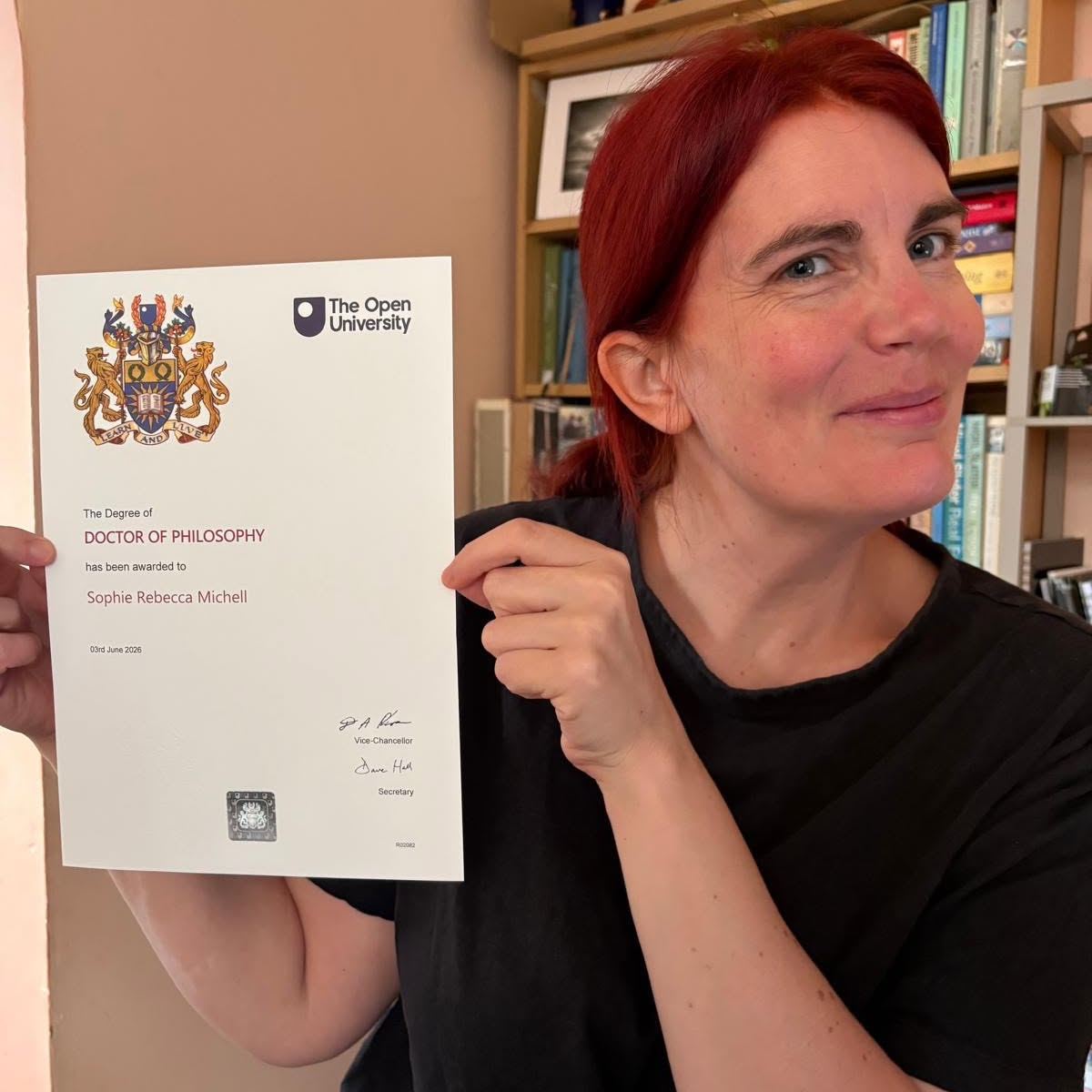
You can read my thesis online by clicking on this link. I will keep you informed of my publishing plans.
My books remain open for family history work, heritage and media consultancy, talks and anything else pertaining to the nineteenth century, the coroner’s court and dying horribly!
You can catch me speaking about my work at a variety of online and in-person events: check the events page for more details.
t took five years and five months to get to this point. And of course, the thirty-five years before that.
On the way there, I put my hype playlist on. Loud bangers. Chuck a drumkit down the stairs to get you in the mood. System of a Down. Rammstein. Nine Inch Nails.
Remember where you came from, remember what you are.
I came from a working-class family. As a child, there was never enough money, never the right clothes, never the right shoes. Autistic but I didn’t know it, compounding the not-fitting-in. I couldn’t go to uni, we couldn’t afford it, wasn’t even an option. I could only afford it at 26 because the OU funded poor people. They don’t do that anymore. I was the second person in my family to go to uni (my sister went first), and I’m the only one with a masters, let alone a doctorate.
I started my BSc in February 2012. K101 – An Introduction to Health and Social Care. Two tiny kids, living alone, unemployed for the first time since I was 18. Terrified. Determined.
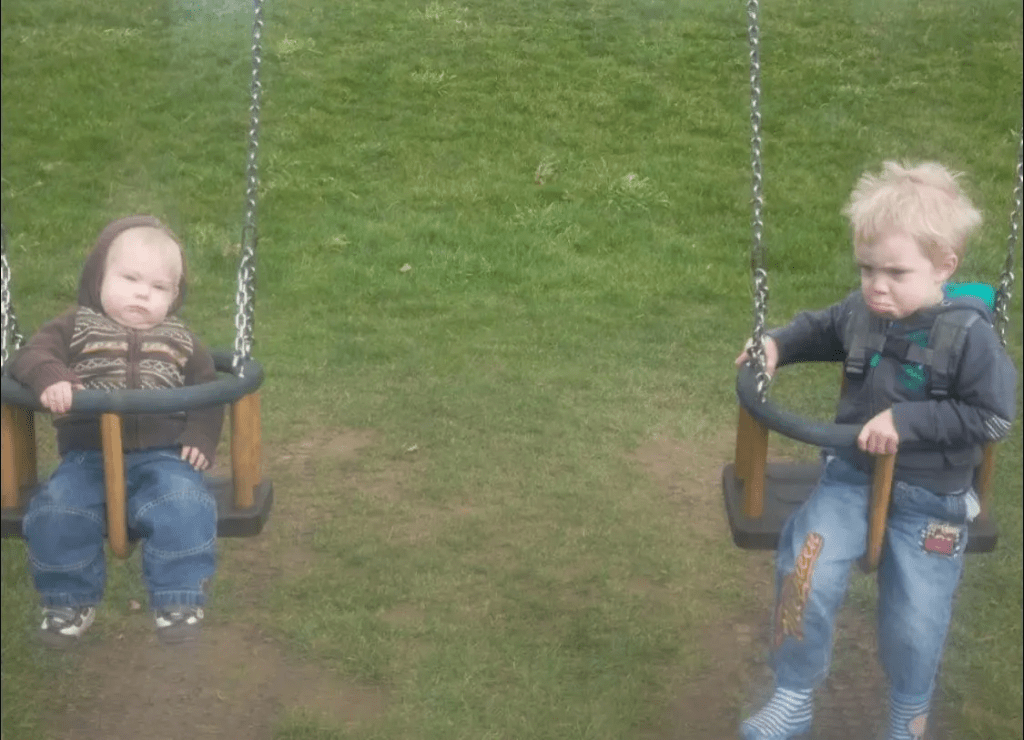
Those tiny kids are now almost 17 and nearly 15. Their little brother is 10.
Fastfoward a little to June 2016, and a first class degree in…science but by then I was a family historian in the making, and my favourite module was history of medicine. I signed up for an MA. My mum was diagnosed with terminal cancer four days later. She died one month in. I carried on for her. And I didn’t want to stop, so I didn’t.
I did all this for her, for my mum Joey, who died far too young. It’s not just that she got me into the history of crime with an absolute library of true crime, she got me into the history of people like me. Without ever realising it, she showed me the value of history from below.
She taught me whose stories are worth telling.
I was demented with anxiety in the week before my viva, cursed with a migraine, unable to see the wood for the trees, convinced my whole thesis was crap. But I woke up on Friday morning calm and ready, a steady stream of reassurance and hype coming in on my phone to speed me along. My supervisors were already there, amazing as ever.
Going into the exam panel, even though I have known both my examiners for years, felt like going on trial.
As it should.
But I passed. I can’t call myself a doctor until the university officially confers the degree, which involves a little bit of tidying on my end and a lot of admin on theirs. Then my thesis will be open access and you can all read it. You know. If you want.
But I passed. I have completed education. Loads of GCSEs, no A levels, but a BSc, MA and PhD.
There are a lot of people to thank.
My supervisors, Professor Paul Lawrence and Dr Donna Loftus. My examiners, Dr Daniel Grey and Professor Rosalind Crone. Legends all.
Lots of OU staff, PARTICULARLY Marie-Claire who sorted out all my funding and admin. But also Dr Luc-Andre Brunet, Dr Erica Borgstrom, Dr Caroline Derry, Dr Denise McHugh, Dr Stuart Mitchell and Dr Angela Sutton-Vane.
Among the myriad delightful academics I have met along the way, Professor Julia Laite, Dr Chris Williams and Dr Mike Esbester have all been incredibly kind and generous, giving me opportunities to share my work and helping out/giving me free books (THANKS CHRIS!!).
Words are not enough to thank the staff, past and present, at Peterborough City Archive, for their boundless support over the last few years. Gail, Elisabeth, Amanda and James, thank you very much.
A PhD would be lonely without friends.
I began this PhD in October 2020, in the midst of pandemic and lockdowns. For most researchers, this meant isolation. For me, as a part-time PGR and full-time carer, it opened up a research community through emails, social media, video calls and zoom meetups. Many of these virtual meetings have blossomed into real friendship. You’re all in my actual thesis acknowledgements (so lol, you have to read it now)but I want to give a MASSIVE SHOUT OUT to Katie, Meesh, Michelle, Nicola, Carly, Jack and the BGS crew, The Footnotes and to Alexa, Steph, Ella and Helen.
A PhD would be impossible without family
Dad and Lou, Jenny and Mich, Judy and John, Dan, Benj, El, Jess, Sooz, Tony and Quinn, not forgetting the in-laws and the niblings. I love you all. Thank you for a million different things like esoteric knowledge about railway engines, babysitting, Excel help, cheerleading, distracting me with drama, proof-reading… and telling me to get on with it.
My boys, my babies who are all nearly men, thank you for making it as hard as humanly possible to get any work done. Way to push your mother, lads.
You make me burst with pride every single day.
But thank you, most of all, to the second most knowledgeable person in the world on Peterborough’s inquests, my beloved husband Tom. I literally couldn’t have done it without you, mi amor.
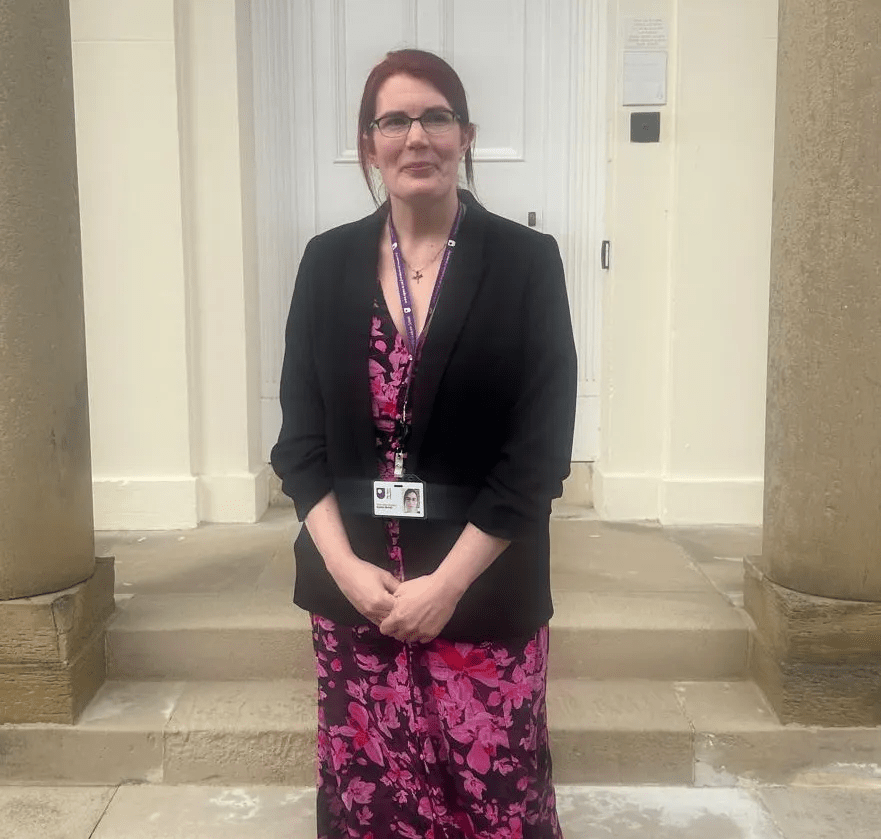
So what comes next?
Well TOMORROW, you can hear me talk about a murderer from Stamford at Curious Histories. I’m still publishing regular horrid murders on my substack, still talking about my research, and I am still taking family history commissions.
…I’ll just take the rest one day at a time…
It’s Christmas and I have a full thesis draft. That’s right, after five years and nearly four months, it’s finished. I will be handing it in on New Year’s Eve.
Next year, I’ll be doing my viva, doing a lot of talks to get the word out about my thesis, maybe writing a book and – very importantly – looking for a job! I will be taking commissions from February, so if you want a family tree… hit me up!
For the past few years, I have been publishing the Friday Murder Club on Substack. I am trying to figure out how to host it locally so nobody has to give money to Substack anymore, but until then, you can find it here.
This is a list of all the murders I’ve written about this year. Some are free, if you fancy a gander. A huge thank you if you have subscribed to the newsletter, or if you’ve read and shared my work on social media. It really does make all the difference.
Merry Christmas, I hope you have a peaceful break x
I’ve published twenty-one stories of murder this year, with thirty-six victims. These are their names:
Frances Smaller, Boston, 1818 [Free]
Mary Alice Attenborough, Boston, 1818 [Free]
Lucy Wilson, Chesterfield, 1907 [Free]
William Martin, John Lacey, John Thomas Colman, Alfred Ebbage, Norwich, 1875/1876.
Mary Ann Sarah Cook, Agnes Josephine Cook, Eugenie Cook, Louisa Elizabeth Cook, Windsor, 1864.
An International Women’s Day special [Free]
William Langley, Northampton, 1892.
Annie Pritchard and Percy Anderson, Northampton, 1892
Nathaniel Bacon, Ann Bacon, Edwin Fuller Bacon and Sarah Ann Bacon, Stamford and London, 1854-1856.
Elizabeth Gardner and her unborn child, London, 1862. [Free]
Jane Lewis and her unborn child, Ystrad, 1862.
Amelia Litchfield, Northampton, 1880.
Susannah Hutton, Liverpool, 1883.
Sarah Millson, London, 1862.
A special on legal defence in the nineteenth century [Free]
William Bushby, George Bushby and John Bushby, Ponteland, 1866.
Jane Mary Lovett, Costessey, 1845.
Annie Rebecca Brownsell, Butleigh, 1898.
John Thomas Cooper, Thornaby, 1883.
William Woollard, Saffron Walden, 1898. [Free]
Hannah Hamshaw, Liverpool, 1883.
Henry Gilbert Colburt, Hail Weston, 1878.
Isabella Crosby Taylor, Sunderland, 1889.
If you would like to book me for work or to speak at your event, please get in touch!
I’ve been very quiet on here – still posting regularly to my Substack – but otherwise trying to finish up my thesis. I will be submitting it at the end of next month.
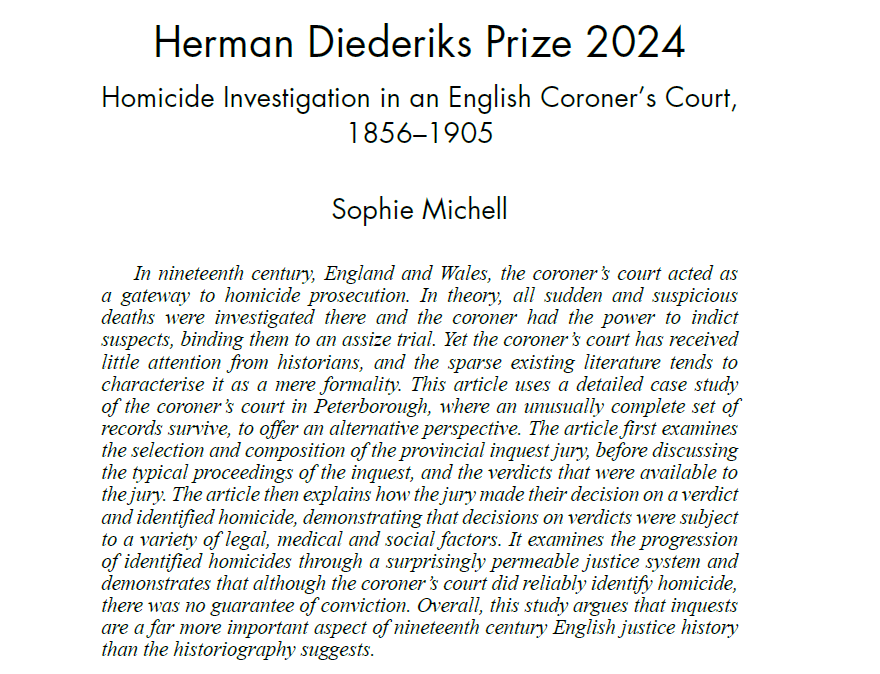
I’ve won two awards this year. The first was the Herman Diederiks prize for best article by a junior scholar in the field of European criminal justice history, awarded by the Fondation Maison des Sciences de l’Homme. My article is about homicide in the English coroner’s court and will be Open Access in two years!
The second was the Vice-Chancellor Lord Perry Award for research excellence in the social sciences, awarded by the AOUG. I had a lovely afternoon celebrating and reading the nice things my supervisors said about me.

What comes after the thesis? Well, watch this space.
If you would like to book me for work or to speak at your event, please get in touch!
Hello everyone, long time no blog because I’m deep into writing my thesis up and it has to take priority. HOWEVER, I have a couple of local events coming up that I thought I would draw your attention to.
First, on 2nd September 2025, I’ll be speaking to Folksworth Ladies Circle at Folksworth Village Hall at 7:30pm about Victorian inquests in the area. Non-members are welcome, at a cost of £2.
And on 6th November 2025, I’ll be speaking to Werrington Local History Group at Werrington Village Centre at 7:30pm. This talk covers death on the railway, and will be similar to the talk I gave at the museum last year, but with more focus on Werrington. Non-members are welcome, and it will be £5 on the door.
I will be speaking at Werrington again in October 2026 about RIOTS! but that’s quite a long way off…
I hope you can come!
If you would like to book me to speak at your event, please get in touch!
I’ve been very quiet on here this year because I’ve been working exceptionally hard on my PhD and lawd, it takes up the time. I have a few public events booked in next year, and will share more information closer to the time.
However, I’ve been writing murders on my substack all year, but they don’t come up on Google searches. So, here is a linked list, an index. They’re all free to read, and if you’d like a little murder every other Friday in term time, subscribe!
I deliberately name the victim, not the killer. Some of these murders ended in execution, some in acquittal, some in laughably brief prison sentences (and I’ve indicated which in the list).
But my focus is, and always will be, on the people who died.
Ann Mason, Godmanchester, 1891. Murderer died on remand.
Joseph Leatherdale, Salcott, 1890. Death sentence commuted to life imprisonment.
Jeremiah Preston, Lyddington, 1878. Six weeks in prison for gross negligence.
Elizabeth White, alias Bess Knox, Berwick, 1871. No criminal charges.
Elizabeth Fallon, Bradford, 1909. Six months imprisonment for manslaughter.
An International Women’s Day special
Thomas French, Castor, 1816. No criminal charges.
Emily Ann Bignall and her unborn child, Shenley, 1888. Death sentence commuted on account of insanity.
Hannah Maria Whittley, Halifax, 1908. Executed.
Catherine Ellis, Ardwick, 1871. Death sentence commuted to life imprisonment.
Sarah Ann Insole, Grimsby, 1887. Executed.
Jane Smith, Antony Plow and Hilda Plow, Todmorden, 1868. Executed.
Jessie and Walter Black, Hove, 1893. Murderer died at scene.
The 23 Victims of the Clayton Tunnel Accident, Brighton, 1861. No criminal charges.
Margaret Ann Baxter, Ryton, 1856. Discharged by magistrates.
John Gill, Manningham, 1888. No criminal charges.
Emily Joy, Godalming, 1889. Executed.
Charles Spencer, Walkeringham, 1860. Executed.
Ann, James, Mary, Harriet and Thomas Saville, Nottingham, 1844. Executed.
The Victims of William Saville’s Execution, Nottingham, 1844. No criminal charges.
Mary Wild, Bilston, 1843. Eighteen months for attempted rape.
Lilian Alice Lyons Meek, Ipswich, 1883. Executed.
Charlotte Farmer, Gosport, 1883. Murderer predeceased victim.
I’m doing a couple of public events this summer!
First, an online talk for Curious Histories on 18th June. This will cover the Victorian coroner and inquest practice, using some Brighton-based case studies. This includes the infamous Brighton Poisoner case!
I’ve spent the last few months contributing to a railway exhibition at Peterborough Museum. On 19th August, midway through the exhibition, I’ll be doing an in-person talk at the museum about the nineteenth-century railway in Peterborough, through related inquests. I’m really looking forward to this, it’s very close to my heart.
BOOK HERE FOR THE BRIGHTON TALK
BOOK HERE FOR THE PETERBOROUGH TALK
I hope to see some of you there!
I’ll also be at the Social History Society conference in July, and I’m speaking at the British Crime Historians conference in September.
Astonishingly, I’ve now kept this little business going for five years. It’s not always easy, with three kids and a PhD and numerous side projects humming along in the background… but I persist because it’s immensely rewarding. My books are currently open, but the waiting list is fairly long.
This year, I’ve completed six full length family trees, which covered 6675 people, and averaged out at 20k words each. I’ve also done four smaller commissions. I’ve taken part in two conferences, one seminar, given a public lecture at uni (which will be online eventually) and got involved in an exhibition at Peterborough museum on the history of the railway (coming in the summer)
I’ve joined the Crime and Punishment Collections network as their family history expert. I’ve written a whole bunch of murders (you can read them here) and found countless tiny stories (which are usually on twitter). I worked on one of the BBC’s top podcasts and started a women’s history group in my city with some wonderful friends.
And I started writing my thesis.
The next year doesn’t look any less busy… Thank you for your support, your custom, and your delightful enthusaism for my weird little history niche.
Get in touch with your own family research problems and questions using the contact page above.
In late 2022 and 2023, I had the pleasure and good fortune to work on seasons 2 and 3 of the BBC podcast Lady Killers with Lucy Worsley, as a researcher for Professor Rosalind Crone.
The new series starts today at 11:30am on Radio 4, or you can listen to it on BBC Sounds. I worked on two cases, including today’s episode on Maria Manning. The Manning case was probably my favourite of all the six cases I’ve done across the two seasons, and you’ll ‘hear’ why if you tune in.
I also worked on the episodes in season two concerning Christiana Edmunds, Edith Thompson, Marguerite Fahmy (which had some wonderful primary sources) and the Liverpool poisoners, Flanagan and Higgins.
I’d like to thank Ros and StoryHunters for making the whole experience so much fun!
I’ve been writing murders on my substack all year, but they don’t come up on Google searches. So, here is a linked list, an index. They’re all free to read.
I deliberately name the victim, not the killer. Some of these murders ended in execution, some in acquittal, some in laughably brief prison sentences (and I’ve indicated which in the list).
But my focus is, and always will be, on the people who died.
Laura Georgina Gray, Lewisham, 1901. No criminal charges.
Henry Barratt, Peterborough, 1864. No criminal charges.
Jane and Emma Baum, Syston, 1864. Found insane.
Alice Eliff, Deeping St James, 1884. No criminal charges.
Katherine Mabel Quatermass, Hemel Hempstead, 1896. Acquittal in magistrate’s court.
Mary Addington, Holcot, 1871. Executed.
Ann Cosford, Northampton, 1871. Fifteen months hard labour.
William Cox Newitt, Wood Burcote, 1873. Executed.
Elizabeth Robinson, Leeds, 1853. One year in prison.
George Cornish, Wells, 1868. Death sentence respited on grounds of insanity.
Olive Beasley, Dudley, 1872. Acquitted at assizes.
Harriet Baker, Burslem, 1877. Life imprisonment.
Eliza Frances Newton, Tunstall, 1878. Twenty years in prison.
Jane Mountfield, Crewe, 1875. Life imprisonment.
William Cooch, Kingsthorpe, 1877. Six months in prison with hard labour.
Maria Steggles, Bacton, 1853. Executed.
David Thompson Myers, Stamford, 1812. Executed.
Martha and Elizabeth Garlick, Astcote, 1875 and 1879. Acquitted at the assizes on the first count, six months hard labour for the second.
Harriet Elizabeth Hibbs, Glatton, 1879. Acquitted at the assizes.
An Abortion Special, England, 1855-1902.
Charlotte Hilton, Parson Drove, 1861. Executed.
Elizabeth Brookes, Aston, 1861. Life imprisonment.
Ann Walker, Birmingham, 1861. Executed.
Betsy and Emily Beamish, Coventry, 1861. Executed.
Stephen Coleman, Devizes, 1881. Executed.
Anastasia Trowbridge, Tollard Royal, 1860. Executed.
Hannah Cox, Steeple Ashton, 1859. One week in prison.
Ellen Wall, Birkenhead, 1876. Life imprisonment.
Rebecca Bannister, Hyde, 1876. Executed.
Emily Pimm, Birmingham, 1898. Six years in prison.
Ada Shephard, Acton, 1880. Executed.
Elizabeth Parker, Kettering, 1854. No true bill at assizes.
Ruth Sampson, Sheffield, 1881. Found insane.
Catherine Quinn, Manchester, 1887. Executed.
Felicitous McLavey, Wakefield, 1870. Acquitted at assizes.
Benjamin Black, Barton Bendish, 1867. Executed.

