
Everyone is related to everyone, if you go back far enough. The thing that people miss is that this also means everyone is inbred. Everyone. Somewhere, probably not too deeply in the mists of time, one of your family branches split, only to reunite several generations later.
Now, there were strict laws in place until the early twentieth century to prevent people marrying (and thus reproducing) with family that were too close in blood. You were allowed to marry a first cousin, and people did IN DROVES, but anything closer than that was forbidden. Unless you were Spanish royalty, in which case you might have ended up like Charles II of Spain:
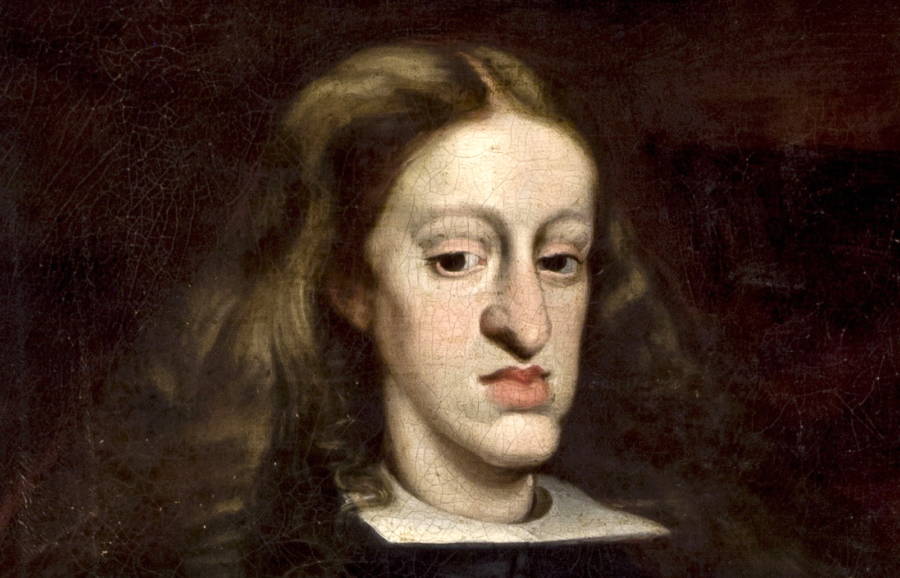
Yikes. Poor Charles was a Habsburg, a family so resolutely devoted to marrying other Habsburgs that their fertility diminished to nothing – Charles was the only child to see adulthood of his father’s fourteen liveborn children. Charles’ parents were uncle and niece (ew), his paternal grandparents were cousins (and one set of his great-grandparents were also uncle and niece), and his maternal grandparents were also cousins. This was not a gene pool likely to produce healthy children. Charles probably had acromegaly, and various other genetic disorders, and died without issue. This plunged the Spanish into a succession crisis, but was…perhaps for the best?
The common people were protected from this sort of thing by consanguinity laws. Some of these laws seem a bit daft now – you weren’t allowed to marry your dead husband’s brother until 1931, although people did. However, pedigree collapse, when your family pedigree stops dividing because everyone’s related, still occurs from time to time. Here’s an example which is based on a real family tree I did:
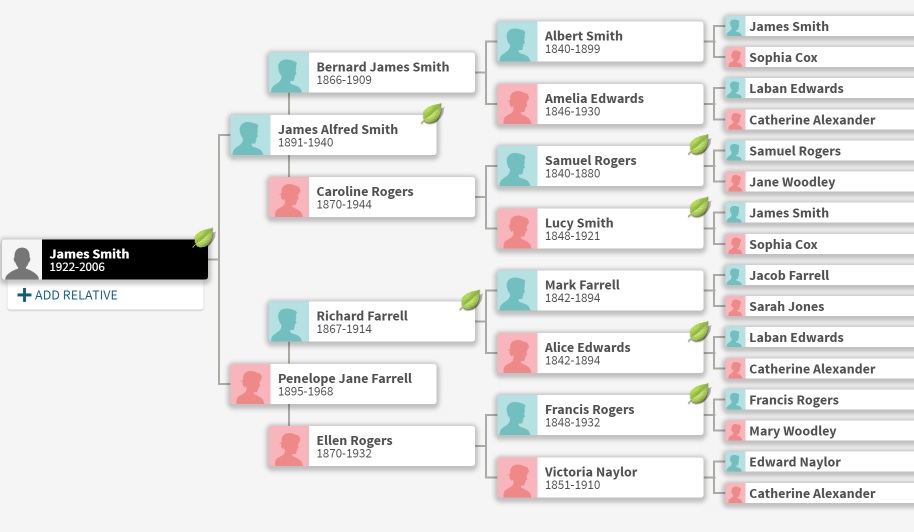
This is completely fictional, despite Ancestry thinking these are real people. Anyway, James Smith has two parents, four grandparents and eight great-grandparents. It’s the fifth generation where the problem creeps in – he only has eleven great-great grandparents instead of the expected sixteen. If you go a further generation back, and assume Jane and Mary Woodley are sisters, and Samuel and Francis Rogers are brothers, then he has just eighteen greatx3 grandparents instead of thirty two.
None of James Smith’s family is ostensibly inbred. Nobody’s marrying siblings, or nieces or nephews. The closest familial intermarriage is between cousins, and both lawful and standard in the nineteenth century. But the cumulative effect is to decrease the gene pool across time. If James Smith had also married a cousin, perhaps a child of Penelope’s sister, the pedigree would have continued to collapse, but there may have been no obvious effect on their descendants.
This is pedigree collapse as you are most likely to find it, and you’ll most often find it in small villages without much economic migration. You may notice a decreasing fertility across time in families like this, although you should also bear in mind that fertility did drop across the nineteenth century due to increased use of contraception. You may also notice an increased number of infant deaths.
Get in touch with me about your own family research questions on the Contact page above.
 Sophie Michell