
The Miserable Marriage of the Harrowings

I love Victorian divorce papers: little treasure troves of sex and intrigue among the middle and upper classes. Tiny insights through the heavy-backed curtains into the horror and pain of domestic violence. Things you weren’t supposed to know, laid bare, clinical, legal. A rupture in Victorian morality, a wound in the cosy domestic sphere.

When my husband was researching a ship for me, he mentioned that the ship-owner, John Henry Harrowing, had divorced his first wife on account of her committing adultery with no less than three men, I couldn’t resist looking it up. “I bet there was more to it than that“, I said. And boy, was there!

John Henry Harrowing was born in Whitby in 1859. His father, Robert, had been a tailor, but went into shipping in the early 1850s. The Harrowings were wealthy. John’s mother, Jane Ann Tesseyman, was Robert’s second wife. She was from Northallerton, and her father made timepieces. Robert and Jane had married in 1856, four years after his first wife died in childbirth, and Jane raised his surviving daughter. They lived in newly built Havelock Place overlooking the harbour mouth:
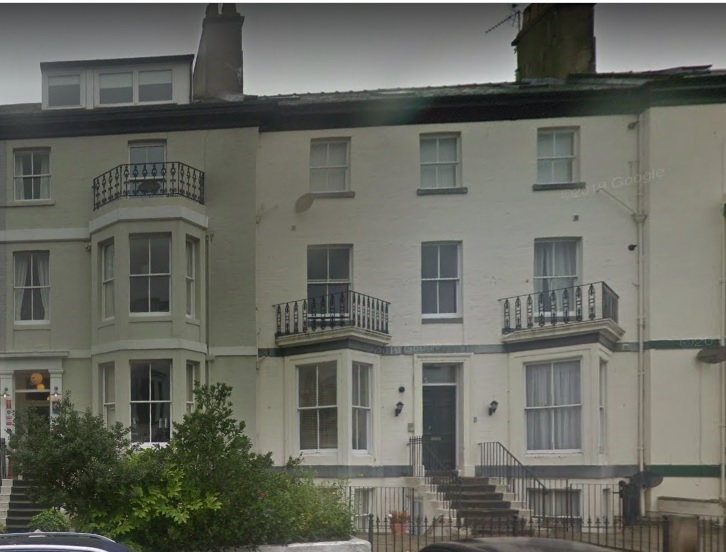
John’s mother, Jane, died giving birth to her short lived seventh child in 1866, aged thirty-eight. Robert left his children in the care of his elderly mother, and remarried in Croydon in 1871. Although this was a long way from Whitby, his business was based in East Cheap in London. His new wife was Catherine Isabella Wilkinson, from Sheffield. They had no children together.

At some point after this third marriage, Robert purchased Aislaby Hall, three miles from Whitby. The seven surviving Harrowing children moved in with their father and stepmother, and probably their elderly grandmother as well, although she died in 1874. The children’s number reduced to six in 1876, with the death of the eldest son Robert, aged nineteen at Balby. The number reduced again a year later, when John’s sister Emily died at the hall, aged fifteen.*

John Henry Harrowing took a more prominent role in the family business, as the eldest surviving son, after his brother’s death. He studied at Kings College in London. When the census was taken in 1881, he was living in Paddington. While living in London, he met Ada Potter.

Ada was born in Forest Hill in London in 1866, the daughter of John Vincent Potter and Ellen Hackney. John and Ellen had married after their first two children were born, but were otherwise respectable. John was an accountant in the city, but died in 1876. He left his widow and six children with a small estate (£1500: about £700,000 now), but they appear to have scattered after his death. Ada’s whereabouts in 1881 are unknown.

John married Ada at Holy Trinity Church in Beckenham on 18th November 1885, when he was twenty-six, and she was nineteen. The marriage was witnessed by Ada’s sister Helen, John’s father, stepmother and his sister Annie.

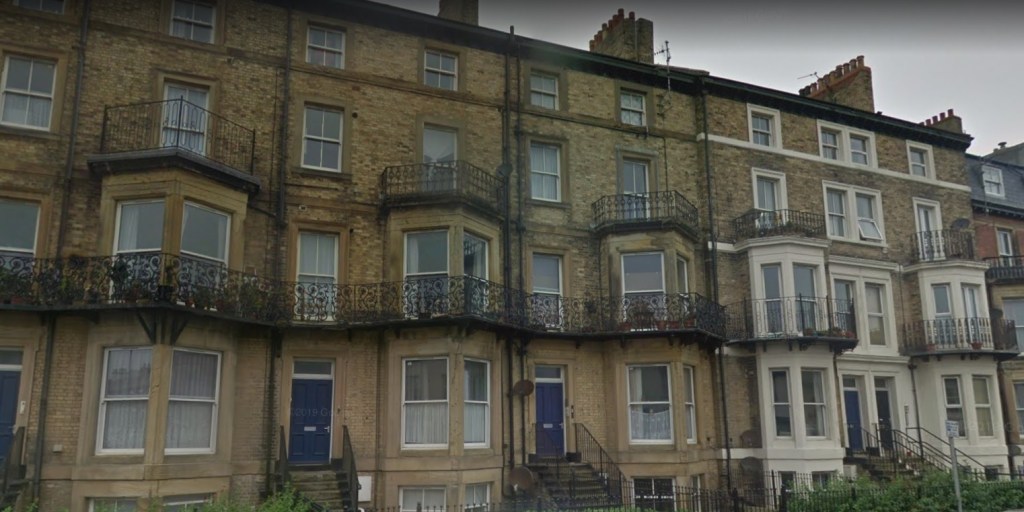
Ada was either already pregnant, or became pregnant immediately, and their first baby was born in Whitby on 4th August 1886. A second son followed on 6th May 1889. When the census was taken in 1891, Ada and John lived on the Esplanade at Whitby (now West Terrace, yards from Havelock Place):
They also owned a house at Ruswarp, called Turnerdale Hall:

They also owned Woodleigh House, down the road from Aislaby Hall, which I cannot find a picture of: it’s still standing.

In August 1893, the pair separated. And in October 1893, John filed for a divorce, which shocked and delighted the newspapers.

A quick note on Victorian divorce law. Women were not permitted to divorce their husbands unless they could prove both cruelty and adultery, and even then were likely to become social pariahs. They usually also lost custody of their children. Men could divorce their wives for adultery alone, and tended to have the resources to do so: divorce was expensive.

So, on the 3rd October 1893, John filed for divorce on account of Ada’s adultery with two men: Charles James MacColla (a French-born solicitor), and Captain Percy Monson (a rather disreputable American with numerous aliases). Three weeks later, he added the name Robert Henry Garratt. Three days later, he agreed to pay Ada £7 10s a week to keep herself (about £3300 a week in today’s money). She was allowed to see her two little boys for four hours, once a month, at John’s home. In July, her monthly contact was suspended on account of her ‘molesting’ her husband and children. It’s unclear what was meant by this: perhaps she was hysterical, or tried to take the children away.

A flurry of affidavits, claims and counter-claims went between the solicitors of the two parties, and it wasn’t until November 1894 that the case came to court, and hit the newspapers. The divorce papers do not feature any subsidiary evidence, but there was plenty of it mentioned in the court papers, mostly generated by John’s family: intercepted letters that Ada had sent to her friends, testimony by John’s family and friends. However, I can only base this write-up on what I have been able to read myself.

Ada’s divorce was contested by Robert Garratt, one of the men accused of adultery with her. According to the newspapers, the marriage was happy until they met the Garratt family. The Garratts were family friends of the Harrowings, and the evidence of Ada and Robert’s adultery was chiefly based on John walking in on Ada alone with Robert once, and on Ada walking around Whitby with him. The affair was said to date from the summer of 1890. One man testified that he’d seen Ada and Robert go into the Harrowings’ house on the Esplanade when it was otherwise empty. Another man claimed he had seen Robert and Ada together in the woods, but it was strongly intimated that this was part of a blackmail attempt: “Anything would get to be a scandal in Whitby” said Robert. Robert’s wife testified that she did not believe he had committed adultery with Ada, but that John had forbidden Robert to enter the house. John’s sister, Helena, and an unnamed aunt testified that Ada and Robert had been alone together on several occasions. A cook called Jessie Wilkinson, who may have been related to John’s stepmother, also testified that Robert had been in the house when John was not. John claimed Ada had become a different woman after she met Robert Garratt, losing her ‘modesty and delicacy’ towards him.

Ada announced at Christmas 1890 that she was going to stay in London, and John had followed her and found her in a hotel – he suspected she had gone with Robert Garratt, but Robert was actually in Liverpool with his family. John then hired a private investigator to watch where Ada went. In 1891 or 1892, depending on source, she left again, and the investigator found her staying at Margate with Charles MacColla. The case against Percy Monson claimed that Ada had picked him up at Margate aquarium and promptly gone to stay at a hotel with him. In 1893, it was alleged that Ada and her sister, Helen Newton, had set themselves up as high-class prostitutes at Bedford Place in Bloomsbury. John also testified that Ada had falsely accused him of adultery and attacked him on more than one occasion.

The court found that Ada had committed adultery with both Charles MacColla and Robert Garratt, and Robert was ordered to pay John £300 in damages. The court did not find she had committed adultery with Percy Monson, although no reason was given for this discrepancy: perhaps the court did not think it feasible that Ada was a prostitute. Ada was ordered to pay the costs of the divorce. The courts later decided Ada did not have to pay all the costs on account of the cruelty she had suffered. By May 1895, Robert Garratt still hadn’t paid the money he’d been ordered to, and the divorce was not completed until July 1895.

It’s what the newspapers did not report that is of interest. They all made reference to Ada’s ‘counter allegations’ without elaborating on what they were. John was advised not to call Ada to give evidence at the divorce hearing, perhaps because they did not want her allegations to become public knowledge. John’s initial divorce statement claims that Ada committed adultery on 26th August 1893, in Greenwich and in early September in Margate, both with Charles MacColla. He claimed she had committed adultery with MacColla again in mid-September in London. In his first statement, MacColla was the only man he accused. He added accusations about Garratt and Monson later, after Ada had filed her counter-suit.

Ada’s rebuttal and counter-suit survive, and shed much light on their ‘happy’ marriage. In January 1886, when she was in early pregnancy and they had been married just two months, the couple were staying at John’s aunt’s house on Royal Crescent in Whitby. John came home drunk, pushed Ada over a chair. Later that evening, he physically kicked her out of bed, and Ada was ill for two weeks. This was the first of many occasions, she reported: he would kick her out of bed when drunk, not let her back in, and sometimes spit on her. When Ada left to go to London at Christmas 1890, she said John had thrown the contents of her bag all over the drive, grabbed her, and threatened to kill her. He then locked her in a room with him and his aunt, and wouldn’t let her out. Ada left John on this occasion, but in January 1891, he begged her to return, so she did.

A month after she returned, while saying her prayers at the bedside, she alleged John hit her around the head and shoulders, then woke up their eldest son (aged four) to tell the boy how his mother was wicked and ‘would for the devil’. Later that night, John kicked her out of bed again, leaving her bruised, pushed her from the room and locked her out.

In the spring of 1891, John grabbed her by the throat, forced her to her knees and nearly strangled her. At Christmas 1891, he threatened her with a revolver, and in January 1892, she left him again. She returned when he promised to behave better.

This time, things seemed to be better for a little longer. However, in September 1892, he threw Ada out of their bedroom by her neck, then threw her down the stairs.

In August 1893, around the time their marriage finally ended, and probably with proof from the private investigator that Ada had been seeing Charles MacColl, John called Ada a prostitute in front of their children and governess, then beat her about the head, pinned her to the floor with his knee and banged her head against the floor, and tried to strangle her again. He then threw her against the room into a wall, threatened to knock her brains out, and then kicked her over a chair. Ada was visibly battered and bloody from this assault, and left her husband a final time on this occasion.

Ada claimed her husband frequently called her a prostitute in front of her children (who were seven and four when the divorce proceedings began), encouraged the children to call her a prostitute, and told them not to obey her. She also claimed that her husband committed adultery with a woman named Jenny Atkinson on his boat, moored at Whitby, and at Turnerdale Hall.

John denied adultery. He did not deny that he had hit his wife, only that he had never been ‘excessive’, except ‘in self defence’. In court, he claimed Ada had attacked him – he went to some lengths to paint her as a hysterical prostitute.

John was a jealous husband: he admitted in court that he was jealous of Robert Garratt, and also of Ada spending time with her sister Helen. The fact that he was so violent towards Ada in their bedroom, and constantly called her a prostitute, long before he claimed to suspect her of adultery, suggests he experienced violent sexual jealousy and possessiveness of his wife. There is an undertone of sexual violence throughout Ada’s affidavit- although marital rape was unrecognised, many of their arguments occurred in the bedroom and strangulation is a frequent feature in rape and serious domestic violence cases.

Ada’s whereabouts before their marriage aren’t known, and her sister Helen certainly moved around London living with men she wasn’t married to, so it’s not impossible that Ada had been a ‘kept woman’ before she married John.

So the marriage ended. John returned to Whitby with his two sons. In 1897, he remarried. His second wife was his maternal cousin, Jane Ann Tesseyman, the daughter of his uncle William. Jane was born a year after John’s mother died, and was named after her. John and Jane appear to have been happily married: they had four children, and lived in Ruswarp. John inherited a vast fortune when his father, Robert, died in 1900. Robert left well over a million pounds, worth somewhere between fifty-five and eighty-eight million today.

John was knighted in 1921:

Sir John Henry Harrowing by Lafayette
Whole-Plate nitrate negative, 7 July 1926 National Portrait Gallery x69096. Used under Creative Commons license

He died in 1937. His second wife, Jane, died in 1961, in her nineties.

Ada is completely untraceable after their divorce. She may have changed her name, or gone abroad. Robert Garratt is also untraceable. Charles James MacColl died in 1919. Percy Monson is untraceable, and presumably went back to the US, to continue to be disreputable and mysterious.

Neither of their sons had a happy ending. The younger, John, was killed in action in 1917, aged twenty-eight. The elder, Robert, suffered a head injury in the First World War, and shot himself in the head in 1932, when he was forty-five.

  1. I am grateful to Estella Harrowing and Jo for their information on the location of Aislaby Hall: the photo that previously featured on this blog was of a different Aislaby Hall, close to Pickering.
  2. Money conversions done using http://www.measuringworth.com
COVID-19

Just a brief note to say that production at the family tree factory is unaffected by coronavirus, unless I become ill, since I already work from home. Unfortunately, some talks I had planned for the summer have been cancelled,and will now take place next year.

I am now homeschooling three primary school children, and two have autism, so production may be a little slower.

If anyone in my family is unwell when your work is completed, I will delay printing, binding and posting it out for two weeks, to help prevent infection transmission. I will be in touch with any clients this affects directly.

Stay safe my friends. Wash your hands!

My little Boadicea

Facebook keeps telling me to add something to my page to entice visitors. And I’ve got plenty to share (or at least, I will in a month, when my self-imposed embargo ends) but none of it feels like it matters much at the moment.

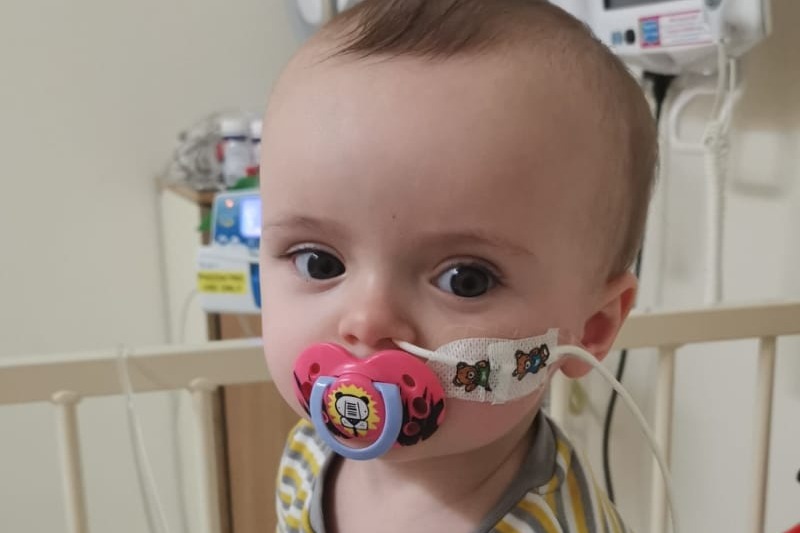
See, a little over a month ago, we got a phone call in the early hours from my brother in law. My niece Eliza, who had been in hospital with rotavirus for a couple of days, had a brain tumour. She was off to Queens Medical Centre in Nottingham for life-saving surgery. And the world kinda stopped. She turned fourteen months old that day, and that’s a very small brain in a very small head. This picture was taken around the time she was diagnosed, pre-surgery. You can’t tell from looking at her, but her brain was dangerously full of fluid at this point. I think that was the weirdest part of it: she didn’t LOOK much different, aside from the slightly blown eye.

She had her surgery three days later. It took twelve hours, but she got through it apparently with only very minor damage. She was diagnosed three days after that with a malignant ependymoma. This is a fairly common type of brain tumour in younger children, but brain tumours aren’t particularly common.

Brain cancer. Urgh, what a horrible pair of words. After two more surgeries, and a few complications, Eliza started chemo this week. One week down, fifty-odd to go.

So, that’s what has been happening. But let me tell you a bit about Eliza, because she’s so much more than a diagnosis. She is a warrior. She is Boadicea, laying waste to north Lincs. She came round from her surgery bitching furiously about it all, and then dinosaur-growled her way through recovery. She spent precisely two days in intensive care after her surgery, because she was not going to let a little thing like major neurosurgery keep her down for long. She was not supposed to be able to move much for a month or so after surgery: two weeks later, she woke her dad up looming over him in her cot because she’d had enough of lying about. She is marvellous. She loves to dance, she loves her dog, she loves music, she loves banging cups together and goes to sleep clutching them. She has always reminded me of an owl, with her big, knowing eyes. You get the impression that she knows exactly what’s going on, and doesn’t like it at all! She’s wise. She’s supergirl.

My BIL and SIL have put everything else on hold in order to spend as much time with Eliza as possible – what else can you do in these circumstances? They’ve had three days at home in the last month, the others have been spent sleeping on hospital floors (because you only get one camp bed per bay) and eating 80% of their meals from Costa. It’s alright for a few days, but it does get a bit much after a month. They have access to the Clic Sargeant house in Nottingham, but they don’t want to leave her. They’re fundraising to help cover their living and transport costs, because they can’t work at the moment. You can donate here, if you feel inclined, or share the fundraiser on your own social media.

And if I owe you work, I apologise if it’s taking a bit longer than I promised!

Merry Christmas

Just a quick note to say that I am now closed for new orders until January 6th 2020.

I’ve already got quite a lot of exciting things planned for 2020 and I will be back to tell you all about them after lying in a darkened room for two weeks.

Thank you all so much for your support and loyalty. I hope you all have a wonderful Christmas, and a happy new year.

Sophie 🙂

The Death of Innocents

Or infant mortality in the Victorian era.

A while back, a meme went round twitter asking “What would have killed you before modern medicine?” The answers were many and various. Measles was an obvious one. Scarlet fever. Influenza. Childbirth. Cancer was common, as were accidents: wound infections and compound fractures. But what most people responding to this meme didn’t realise is that the real challenge of mortality before the development of vaccines and antibiotics was surviving early childhood. If you could survive to your fifth birthday, then you had a fairly good chance of surviving to adulthood. If you could avoid the many infectious diseases and tuberculosis, then you might die at work in an accident, or in childbirth. Or you might live long enough to develop cancer and die of that instead. Or you might live to be 85 and die of bronchitis in the workhouse.

So, why was it so difficult to survive the first five years? Let’s break it down.

First, you have to survive forty-ish weeks of pregnancy. In a world where overcrowding was common, DIY abortions were also common, and could kill the woman as well as the foetus. Stillbirths and miscarriages were also common, since there was absolutely no antenatal care in the modern sense of the word.

Then you have to survive being born. Unless you are extremely poor, you will be born at home, delivered by a local midwife. There was no formal training for midwives, and no registration scheme until the 1900s. So, your local midwife would be a woman with plenty of experience. If she was struggling to deliver a baby, she would call for the local doctor. Local doctors did not necessarily know anything about childbirth. I came across an inquest in Peterborough where three doctors were unable to identify a uterus. Newborns often died of seizures in the hours after birth, due to being starved of oxygen during the delivery. If your parents were extremely poor, or your mother unmarried, you might be born in the workhouse, where (ironically) your delivery might be supervised by better qualified staff than at home.

Now, your mother also has to survive pregnancy and birth. There was no real contraception available, so working class women could expect to be pregnant every two to three years, if they breastfed, and annually if they didn’t or were very fertile. The average woman had eleven children in her lifetime in 1841, dropping to six by 1911. There were limited options if a baby was difficult to be born: forceps had been developed in the late eighteenth century but required skill to use them safely, and most provincial doctors were terrified of using them. Caesareans were a last resort, done to save the baby of a dying woman, as they had a maternal mortality rate of 85%. They did not become a routine part of childbirth culture until the 1940s. Your birth is not aseptic: it occurs in the family bed without clean hands or clean sheets. There are no antibiotics to treat postnatal infection, in the uterus itself or in birth injuries. The standard treatment for postnatal haemorrhaging is brandy. Should your mother die in childbirth, and you survive, your future is limited unless your father can find someone to look after you quickly.

Congratulations, you have survived birth. Now you have to survive early infancy, where if you are lucky, you are breastfed. If you are unlucky, you are fed on a mix of milk and cornmeal (best case scenario) or water and bread. There is no sterilisation, so diarrhoea is a common cause of death. There are no antibiotics, so minor chest infections can kill a baby in days. There is, however, a staggering array of opiate-based drugs made by chemists to give tiny babies. Teething? Cocaine, opium and alcohol. Colic? Opium and alcohol. Constipated? Fruit syrup and alcohol. Diarrhoea? More opium. Opiates given to babies makes them quiet, constipated, anorexic and sleepy. And it quite often made them die. Opium and cocaine were not restricted in over-the-counter medicine until the 1920s, which is something to bear in mind when older people complain about the drug habits of today’s youth. In at least one Fenland village, beer was laced with opium in an effort to avoid malaria. Should you find a baby’s death certificate where the cause of death is marasmus, it is fairly likely that the baby died of wasting due to opiate use.

Once you begin to move under your own steam, a whole new world of things that can kill you emerges. Open fires, openly boiling water, lamps and candles. Clothing isn’t flame retardant, and both boys and girls wore dresses in infancy. If you caught your clothing, you went up like a firework. Baby harnesses, such as seats and cribs, were often made of wicker. And burns and scalds didn’t have to be severe to cause death: infection was common.

The sheer amount of open water is also difficult to get the modern mind round. Every home had a cistern, a water butt, and many babies drowned in them while playing. In Peterborough, where I live, there were dozens of unfenced streams, fen drains, flooded gravel pits and rivers for children to fall into. Although there are no cars, there are horses and carts, and just getting caught across the head by a iron wheel edge is enough to kill a small child. Most small children were sensible enough not to play near the railways, but another issue in the Victorian era is that working-class children were not adequately supervised compared to now. I’ve read dozens of inquests where children died because they were under the ostensible supervision of a bedridden elderly family member. Most, however, were just left with older siblings. Five-year-olds watching two-year-olds.

Then there is the ever-present spectre of disease. Diseases we know now as fatal: meningitis, polio, measles, tetanus, diphtheria. Diseases we know now but don’t consider so deadly in small children: scarlet fever, bronchitis, pneumonia, tonsillitis, appendicitis, diarrhoea+vomiting, flu. And diseases we don’t know now, at least not generally in England. Typhus, a virus spread by body lice and fleas. Tuberculosis, which spreads most viciously in overcrowded living spaces. Malaria, endemic on the fens. Cholera and typhoid, waterborne bugs which cause rapid death by extreme dysentery. All these diseases were helped along by the generally poor health of children at the time, particularly in urban areas. Rickets, malnutrition, short-stature, all weakening a child’s immune system.

Frankly, it’s a wonder any of our ancestors survived at all.

The Willenhall Wife Murderer

It’s not unusual to find murders in family histories: you go back far enough, follow enough branches, and someone will have been killed, usually by someone they love. I personally find it fascinating to follow a Victorian murder through the newspapers, see how it was dealt with. I’m rarely shocked. But the Willenhall Wife Murderer shocked me.

Christopher Edwards was born in Willenhall on 21st March 1838. He was apprenticed as a locksmith, and then took a job working for a lock firm called Alexander Lloyd on Stafford Street in Willenhall. He married Rosanna Ecclestone at Wednesfield on 14th November 1859. Rosanna was from Darlaston, a year younger than Christopher, and by all accounts, an attractive, sober and hard-working woman.

Christopher and Rosanna lived at the junction of Church Street and Froysell Street in Willenhall, next to the Connection Chapel. The chapel is still there, now derelict, but all the houses have gone. Four children were born over the next twelve years, two boys and two girls. The boys, Albert and Edwin, died young. The girls, Regina and Laura, did not. Christopher had a fifteen-year-old apprentice called George Marsh who lived with the family, and Rosanna worked as a dressmaker. All seemed respectably working-class Victorian.

It wasn’t, of course. Christopher had a violent temper and a penchant for alcohol. He was well known for beating the hell out of Rosanna. At the time, wife-beating was mostly overlooked in law. Women belonged to their husbands, and their husbands were allowed to chastise them ‘within reason’. Naturally, ‘within reason’ was an extremely elastic term. There are cases of men beating their wives half to death and walking free because their wife had been drinking, or asked for money , or been a nag. There was no affordable divorce – women who could afford divorce had to prove their husbands were violent AND adulterous. In 1887, magistrates were empowered to order violent husbands to pay separation maintenance to their estranged wives, but in 1872, Rosanna had little option but to stay with her husband. Without him, she had no income.

Christopher was violently and irrationally jealous. The newspaper articles of the murder reported how Rosanna’s marital conduct was flawless, there was literally no reason for him to suspect her of being unfaithful, but he did. If she looked at another man, he would beat her. The two little girls often witnessed these beatings, and the elder – Regina – would go and hide at the neighbour’s house when they happened.

Saturday 27th April, Christopher and Rosanna had an argument. The argument was probably because Christopher was jealous, but it was severe enough that Rosanna feared for her life. She hid the family’s knife and cleaver at a neighbour’s house, but returned for the knife a couple of days later.

On 30th April 1872, at 2:30pm, Christopher left his work in a rage. There weren’t enough lock tumblers for him to work with. He had already tried to leave his job, the week before, and been unsuccessful in finding a new employer. He claimed he stopped off at the Shakespeare Pub on Somerford Place on his way home, after some friends called him over. However, this pub was considerably out of the way of any walk between Stafford Street and Church Street and it’s more likely he went there because he knew his friends would be there. He stayed at the pub until 7:30, and then went home. After he got home, another friend called in. Doubtless they had another drink.

Meanwhile, Rosanna had been at her neighbour’s house – the one who was hiding her blades – then gone to the chapel next door to hear the children sing. She was home by the time her husband returned from the pub. They ate supper and Christopher read the paper (Christopher was unable to write, but could read). They went to bed, and Christopher returned downstairs for his snuff. He locked all the doors, and also picked up a poker that he’d hidden by the back door.

He went up to their bedroom, and hit Rosanna twice in the face with the poker. She screamed out for the apprentice, George to help her, and fell to the floor. Christopher dropped the poker and strangled her. Then, despite knowing she was dead, he took the poker again and beat her around the head. The neighbour who lived across the road witnessed the entire murder through the window.

Little Laura, aged only three, had been woken by her mother’s screams. Christopher picked her up, along with a candelabra and the bloody poker and went to see George, who was asleep in the room next door. He asked George to take the children to Rosanna’s brother, and to sell the contents of the house. He told George that he wouldn’t hurt him, because he didn’t ‘do it for him’ – i.e, he didn’t think Rosanna had cheated on him with George.

The police arrived as Christopher walked downstairs, saturated in blood, carrying Laura in his arms. A crowd of residents had gathered outside and tried to lynch Christopher. He was arrested, and expressed surprise that Rosanna was dead: “I don’t think her’s dead; her hadn’t ought to be. I don’t think they’ll give me over twelve months, will they?” If Rosanna had survived, a twelve month prison sentence would have been about right for the time!

Christopher was held in Stafford prison until his trial. Meanwhile, the clergy of Willenhall tried to make some money for Regina and Laura. They didn’t get as many donations as they’d expected: £60 by mid-May, which they were disappointed by. In modern money, that would be approximately thirty thousand pounds.

On 24th July 1872, Christopher appeared in court. His counsel had refused to represent him the day before, as Christopher had no money to pay for him, so he was represented by Mr Motteram instead. Christopher pleaded not guilty, but he was found guilty in three minutes by the jury – hardly a surprise, considering he was caught literally red-handed.

Five days later, Christopher made a full confession to his chaplain:

The Confession of Christopher Edwards, July 29th 1872. On Tuesday 30th April, I left my work at about 2:30 with the determination of doing no more work that day as no tumblers had been provided for my locks. On the way home, I passed the Shakespeare Inn. I was called by William Cooper, Jesse Tonks and Charles Bateman. I remained with them and others drinking til about 7:30 when I went home but the worse for drink. James Adey came in at 8 and remained about half an hour. Soon after he left, we had a supper and I read the paper for a short time. It was I resolved to kill my wife that night, but fearing if I took the poker upstairs she might take alarm, I left my snuff box on the table as an excuse to go down again. We went upstairs, I think together, when, saying I had forgotten my snuff box, I descended, and taking the poker from the back kitchen, immediately returned to the bedroom. On entering, my wife was near the door and turned towards it. I struck her with the poker on the forehead. She cried out “George” three times, I think, and I rapidly gave her another blow on the top of the head which caused her to fall across the bed. She did not move or make further cry. I jumped over the bed, between my wife and the head of the bed, and placing the poker by the head of the fireplace, seized her throat with both hands and strangled her. My right hand and arm being on her chin and resting on my knee, were covered, together with my right leg, with blood from the wounds. Having held her in this position for some minutes, I let go, when her head dropped over the side of the bed where the pool of blood was found, and I knew she was dead. Grasping the poker once more, I dealt her several blows about the back of the head, and at this time I think it must have been that, in my violence, I knocked over the candle which was on the chimney piece. I replaced the poker near the fireplace and went downstairs for a light. On my return to the room, I placed the body of my wife lengthways on the bed as it was found, taking the poker, the candle and my younger child. I have no recollection of seeing the eldest at that moment. I went to George Marsh’s room as he states. The above is a true account of the way in which the murder occurred. There was no quarrel, nor had there been any words between my wife and myself since the previous Saturday evening, but often while under the influence of drink, which always inflamed my jealous feelings, I had resolved to murder her. My wife was a good, decent and hard-working woman and if I had been ruled by her, we should have been the happiest couple in the land; but I yielded to the influence of bad companions and drink. Drink has been my ruin and is the ruin of most of the men of my class in the neighbourhood. May those take warning by my unhappy fate. [1]

It seems likely that this confession was embroidered a little by the chaplain: the last few sentences blaming alcohol are almost comical after the dispassionate description of pre-meditated, violent slaying of his wife. The confessions of condemned prisoners were widely distributed as popular entertainment: this was useful propaganda for the Temperance movement

Christopher was executed at Stafford prison on 13th August 1872. He was executed using the standard-drop method, dropping the condemned prisoner between four and six feet. The aim was a speedy death due to breaking the neck. However, Christopher was not heavily built, and dangled for some time before dying. He is buried at Stafford prison.

Their daughter Regina went to Australia in 1878, aged eleven. Their daughter Laura remained in Willenhall, where she was raised by an aunt. She died there in the 1920s.

Get in touch with your own family research problems and questions using the contact page above.

  1. Staffordshire County Herald and Advertiser, 17th August 1872.

One Life

Sometimes, quite by accident, I stumble across lives that aren’t closely related enough to the family I’m researching to include, but are so full of juice that I can’t just leave them be. Pattie Robinson had one such life.

She was born Martha Lewis, probably in 1877, but was always known as Pattie. Her father, Edward Lewis, was a miner. He died in early 1881, leaving her mother – Ann Priscilla – widowed with six children. In 1883, Ann married a Belarussian Jewish immigrant named Solomon Robinson. Solomon was born in Minsk in approximately 1850, and his birth surname is unknown.

Pattie adopted the surname Robinson when her mother remarried. They lived in Clydach, where Solomon worked as a furniture dealer. In the 1890s, he began to build a life in Canada and was regularly away from home. Ann moved to Builth Wells, where she was born, and took her children with her.

In early 1898, in Builth Wells, Pattie gave birth to her first child, the exotically named Desdemona. About eighteen months later, aged twenty-two, Pattie married John Lewis Lionel Whislay. John was a solicitor’s clerk, born in Liverpool to a tailor from London and a Welshwoman. His father had abandoned the family in the 1870s, and his mother had run a grocery store in Builth. They had a son together six months after their marriage, and then separated.

In March 1901, when the census was taken, Pattie and her two children was living with her mother near Builth Castle. John Whislay had moved to Brecon. He had been ordered to pay separation maintenance, but stopped in the summer of 1904. He was consequently summoned to court, and testified that he had stopped paying maintenance because Pattie was seeing other men (maintenance to wives was only paid while they remained single, which did not include living in sin). He called several witnesses who agreed that a man named Isaac Thomas had been visiting Pattie, but Isaac and Pattie vehemently denied it. John Whislay was sent to prison for three weeks for defaulting on payment.

After he was released from prison, John moved to Newport. He married, bigamously, twice more, and died in Leeds in 1931.

Pattie’s mother died in Builth in 1904. Her stepfather, Solomon, her children, and several of her siblings emigrated to Canada where Solomon had a successful ice cream company. Her son eventually returned to England, but her eldest daughter did not. Pattie remained in Wales, and met a man called William Frederick Cox. William was a chimney sweep from Reading, born in 1875.

By May 1907, Pattie and William were living on Southampton Street in Reading. On the 23rd of that month, when eight months pregnant, Pattie tried to kill herself. She took hydrochloric acid, widely available as a cleaning product at the time, after an argument about money. Pattie was arrested, as attempted suicide was still a criminal offence, but discharged into her husband’s care: her gravid state was not mentioned in the newspapers. She gave birth to an apparently healthy girl on 25th June.

In April 1911, William and Pattie were living as Mr and Mrs Cox on Katesgrove Lane in Reading. Another daughter had been born in May 1910, and given the unusual name Lemburg. Three other couples lived in the house, and two of them had children. Pattie was again pregnant at this time.

The baby boy was born in mid-September 1911, and died from want of care at birth, according to the inquest. A midwife was not sent for until after the child was born, and she described the birth as ‘sordid’. It is unclear whether the baby died because Pattie deliberately had him without help, or whether he was born too quickly to summon help. What is interesting is that she claimed her husband, John Whisley, was an American barrister!

They moved to Crane Wharf, and married bigamously in late 1913.

In February 1921, William was arrested and charged with having a revolver without a license, after threatening to shoot Pattie after an argument. In September 1921, William was sentenced to four months hard labour for pimping out Pattie. Pattie does not appear to have been given any punishment.

However, knowing that Pattie had been working as a prostitute throws light on much of her life. It seems her first husband’s accusations may have been true. Perhaps the argument about money which sparked her suicide attempt in 1907 was because she no longer wished to work at an advanced stage of pregnancy. If the baby boy who died was not William’s, perhaps he did not want to pay for the midwife to deliver it. It seems their relationship was abusive and coercive throughout.

Pattie died in 1936, aged fifty-nine. Her death was registered as Patricia Cox, born in 1881. William Frederick Cox died in 1940.

Get in touch with your own family research problems and questions using the contact page above.

Wife of Charles Monsey

Sacred to the memory of Mary Monsey, the wife of Charles Monsey of this parish, died on 29th April 1881 aged 46.

Here she lies in Worstead churchyard, in Norfolk, just a name on a stone, a married woman, no children. She died young-ish – maybe consumption, maybe cancer. No husband buried with her. Perhaps he remarried and his buried with his second wife?

Nope.

Charles Monsey battered Mary Frances Monsey to death in their front garden, in full view of their neighbours, at 6:30pm on a Friday evening.

They had a curious, but by no means unusual, relationship. Charles was born in Norfolk, and worked as a customs and excise officer in Shrewsbury. He retired on a good pension in 1862, and moved to Middlesbrough where he engaged a housekeeper, Mary Frances Ross. The relationship became sexual. For a while, they lived happily, then separated in 1876 due to violence – Charles claimed it was because Mary was violent to him, which considering later events seems unlikely.

Nonetheless, they married in Middlesbrough in 1878, and in late 1879, they moved to Meeting House Hill at Worstead. In 1881, he was fifty seven, eleven years older than his wife. Charles was respected in the village, on account of being a man of means, and his previous position, but the neighbours also noticed how often Charles beat his wife, often publicly striking her.

According to the testimony given at the inquest, Mary was a Roman Catholic and Charles was a Protestant. This caused many arguments. Both parties were alleged to be difficult: Mary was self-indulgent, wilful and argumentative, while Charles was ‘not right in the head’, and ‘not accountable for his actions’. One story claimed that Mary refused to do any housework, and forced Charles to wait on her. Since he engaged her initially as a housekeeper, this can be taken with a pinch of salt.

On the day of the murder, the couple had an argument, although the reason for the argument was never given. Charles alleged that Mary pulled some crocuses up from the garden and threw them at him as he sat in his living room chair. Charles attacked her, kicking and punching her to the ground. Mary tried to stand, but fell back down. Charles fetched a hatchet from the house and beat her head with it until she died, causing horrific injuries. An audience of neighbours saw this happen, but were paralysed by either shock or fear and unable to help.

Charles behaviour after the murder was not entirely sane. He asked the neighbours to help him conceal the body, as though this was an entirely rational thing to ask them to do. He dragged the body into the shed by the side of the house, and locked the door. He was absolutely saturated in blood, so washed his hands and then threw the bloody water on the garden. A neighbour said he had a wild look in his eye. The police officer who arrested him said Charles was calm, composed and apparently unconcerned about his wife or his actions.

Mary was buried immediately following the inquest, while Charles was remanded in Norwich prison awaiting trial. His trial was postponed due to enquiries about his mental state. It transpired, much too late to be of use, that on 14th April 1881, Charles had written a strange letter to the Bishop of London. In the letter, he accused the church at Salisbury of forcing him into early retirement and asked for an additional thirty pounds a year in pension! The Bishop had passed the letter on to the Bishop of Norwich, but nothing further had been done. It then came to light that Charles had been treated for insanity in the 1840s, and had taken early retirement from Customs and Excise due to insanity. While living in Middlesbrough, he had desecrated a church by smashing a stained glass window and placing three herrings in the aperture, declaring them to be Christ and the two thieves crucified. None of this was reported in the local paper, and Charles does not appear to have ever been treated in an asylum.

In June 1881, Charles was certified insane and removed to Broadmoor, thus avoiding a trial entirely. He died there in 1890. Perhaps if he had been removed from society earlier, as was the custom with Victorian lunatics, poor Mary Frances would have escaped being murdered in front of her neighbours.

The reason I wrote about Mary is because of her headstone. A woman commemorated forever as a chattel of the madman who murdered her. Who ordered the headstone? Who ordered the words? The grave cost was probably met by the parish, although Charles had sufficient means to pay for it himself. It is unlikely Charles ordered the words carved on the stone, so who?

Get in touch with your own family research problems and questions using the contact page above.

Diphtheria

Credit: Wellcome Library, London. Diptheria is deadly: immunisation protects (Ministry of Health) 1945.

My grandmother was born in 1926. She was the second child of her parents’ marriage. My great-grandfather worked on the land on the Wash marshes, and my granny moved A Lot. They generally lived in the middle of nowhere.

This didn’t stop the entire family getting diphtheria in 1939. My great-grandmother had just lost her seventh child shortly after birth. My grandmother, aged thirteen, her older sister (14), and her younger sister (11) all went down with the disease at once.

Diphtheria is hideous. It starts with a nasty sore throat, not dissimilar to tonsillitis. The throat glands swell, the patient feels sick, there’s a very high temperature again similar to tonsillitis. However, unlike tonsillitis, the infection causes a membrane to form across the throat, effectively suffocating the patient. And it is spread by droplet infection, meaning it’s highly contagious among children, who are crap at covering their mouth when they cough.

There was no effective treatment for diphtheria in 1939. There was no penicillin. However, doctors were legally obliged to inform the authorities and contain the source of infection. So, my granny and her two sisters were sent to the isolation hospital in Wisbech (now Manor Gardens, off Barton Road). The hospital was deliberately sited away from the town.

This was not a short stay. They were in there for six weeks. For the first couple of weeks, they had to lie flat at all times, and were gradually allowed to sit up more as the dangerous period passed. My great-grandparents were not allowed physical contact. They lived on Terrington St Clement marsh at the time, over eleven miles from the hospital. They could not drive. Visiting was done through a glass wall on the ward. Meanwhile, the three sisters watched other children come in. They watched children have makeshift tracheotomies to try and keep their airway open. They watched other children die.

Meanwhile, my granny’s younger two siblings (aged 8 and 3) went down with a milder form of diphtheria. My great-grandmother, recently bereaved, chose not to consult a doctor because she couldn’t bear for them to go to the isolation hospital as well.

My grandmother and all her siblings survived, without need for surgery. They were fortunate. All their sheets, toys, clothing and personal items were burned when they left the hospital, rather than risk re-infection. It took weeks to de-institutionalise themselves when they got home, so rigorous was the hospital regime.

My grandmother died in 2001, aged 75. She never forgot her time in the isolation hospital. We once went to see if we could find it in Wisbech – it had been demolished ready to build Manor Gardens at the time, but the gates were still there. It’s all gone now. She carried that memory for sixty two years, long after her parents had died. Her eldest sister, who suffered with her, is still alive. This is living memory.

Diphtheria has been part of routine infant vaccination in Britain since approximately 1962, along with poliomyelitis (which killed and disabled thousands in the early 1950s), pertussis (whooping cough) and tetanus (endemic in the soil, causes respiratory paralysis).

So, we have vaccination now. We have antibiotics that work. We don’t need isolation hospitals anymore. But the more parents that choose not to vaccinate their children against diseases that kill indiscriminately, the more likely it is that some form of fever hospital will be required.

Get in touch with your own family research problems and questions using the contact page above.